| Brand Name: | Hongsinn |
| Model Number: | HS-344 |
| MOQ: | 1,Piece/Pieces |
| Price: | USD,0.78-7.59,Piece/Pieces |
| Payment Terms: | L/C,D/A,D/P,T/T,Western Union,MoneyGram |
| Supply Ability: | 5000,Piece/Pieces,Month |
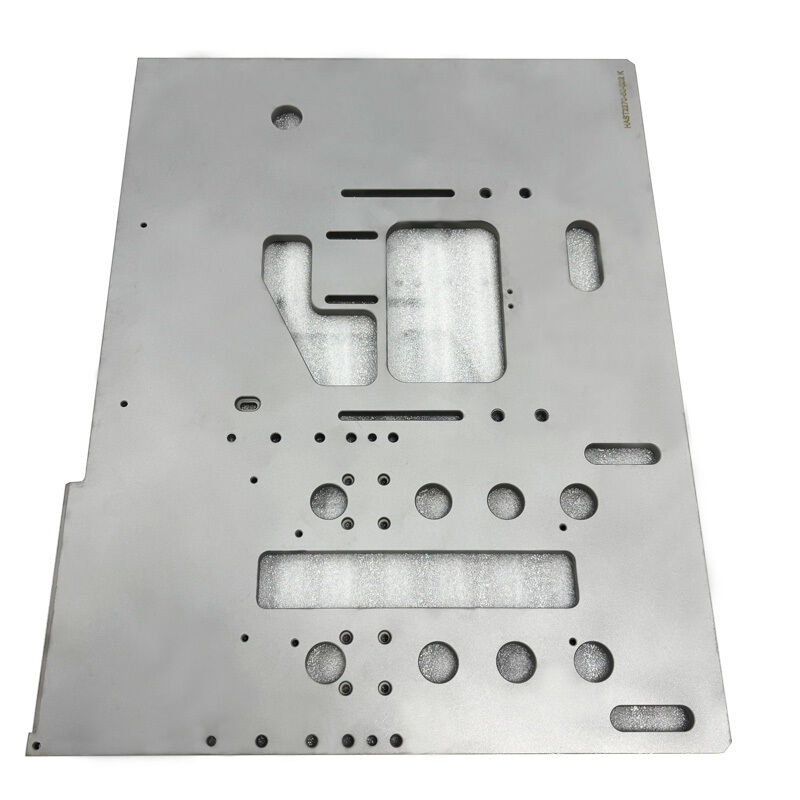
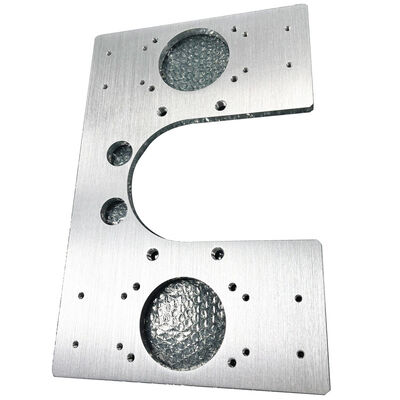
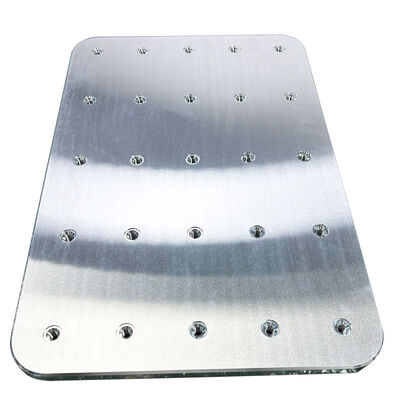
Professional aluminum CNC milling services from our advanced CNC milling center. Precision machining for complex aluminum components with tight tolerances. Fast turnaround, competitive pricing, and expert support for prototypes to production runs. Request your CNC milling quote today!
What Types of Aluminum Are Commonly Used in CNC Machining?
Pure aluminum possesses excellent ductility, resists most forms of corrosion, is non-magnetic, and serves as an excellent conductor of both heat and electricity. However, for most commercial applications, the strength of pure aluminum is often insufficient.
To achieve greater strength, molten aluminum is typically mixed with other elements—such as copper, lithium, magnesium, manganese, silicon, and zinc—to form alloys. These alloys not only enhance strength but also further improve upon aluminum's other inherent properties.
In the context of aluminum CNC machining, the most commonly used alloys generally fall into the following three categories:
Cast Aluminum Alloys
"Casting" refers to the process of shaping metal while it is in a molten or liquid state. Manufacturers produce these alloys by pouring molten aluminum into a mold and allowing it to cool and solidify. Cast aluminum alloys are characterized by their low cost, versatility, light weight, durability, and excellent high-temperature resistance.
The automotive industry is the largest consumer of cast aluminum alloys, accounting for approximately two-thirds of all aluminum used in vehicles. Components manufactured using cast aluminum alloys include engine parts, housings, steering columns, and—increasingly—structural body supports. Additionally, cast aluminum alloys are frequently used in the production of cookware, mechanical components, and handheld tools.
Due to their low melting points, cast aluminum alloys are relatively inexpensive to produce; furthermore, the flexibility of the mold-forming process allows for the creation of components with highly diverse shapes. However, compared to wrought aluminum alloys, cast aluminum alloys typically exhibit lower tensile strength, are more difficult to machine, and cause significantly greater wear on cutting tools.
Aluminum-Lithium (Al-Li) Alloys
Lithium is the least dense of all metallic elements; consequently, aluminum-lithium alloys are significantly lighter than pure aluminum or other materials. It is precisely because of this characteristic that the aerospace industry predominantly selects aluminum-lithium alloys for manufacturing components such as wing skins, internal wing structures, fuselages, and fan blades. Additionally, aluminum-lithium alloys find applications in racing vehicles and launch rockets. Although aluminum-lithium alloys offer significant advantages in terms of lightweighting, they suffer from poor machinability and relatively low fracture toughness—the ability of a material containing cracks to resist further crack propagation. To a certain extent, these drawbacks offset their weight-saving benefits. Furthermore, due to the relatively low production volume of aluminum-lithium alloys, their manufacturing costs are quite high.
Wrought Aluminum Alloys
"Wrought processing" refers to the shaping of metals while they are in a solid state. The manufacturing process for these alloys typically involves casting molten aluminum into ingots or large slabs, which are then processed into the desired shapes using techniques such as rolling, forging, stamping, or extrusion.
In the field of aluminum CNC machining, wrought aluminum alloys are the most widely utilized materials. This is because, compared to cast alloys, they exhibit superior mechanical properties and structural integrity. They are easier to machine, yield better surface finishes, and cause less wear on cutting tool edges.
| Machining Equipment | 15 CNC Tapping Center, 18 CNC Lathes,25 auto lathe,4 MAZAK five axis CNC, etc. |
|---|---|
| Processing | Turning, Milling, Drilling, Tapping, Knurling,Wire EDM ,Grinding,Engraving,Knurling,etc. |
| Tolerance | +/-0.005mm |
| Material Workable | Copper,Steel, Aluminum, Brass, Stainless Steel, Titanium, Plastics (PEEK,ABS, ,Acrylic , Delrin, PP, PMMA, PC, POM, polyethylene,PVC,Nylon), Organic Glass, Carbon Fiber, Wood etc.Other materials your requested. |
| Surface Treatment | Nickel Plating, Anodizing, Chorme Plating, Brushing, Polishing, Blacken, Powder coating, Sandblasting, de-buring, Electrophoresis,Passivation, etc. |
| Drawing Format | JPEG, PDF, DWG, DXF, IGS, STEP, CAD |
| MOQ | No MOQ Required, 1 PC is fine for us. |
| Lead Time | 1-30 days accordingly to your orders. |
| Quality System | 100% inspection before shipment, (CMM, Projector, Gauge and other inspection tools) |
| Size | Customization |
| Standard | OEM/ODM |
| FOB Port | Shenzhen,China |
| Pay ment | 50% T/T in advance,50 % before shipment . Accept T/T L/C ,Escrow,paypal,Western Union |
| Packing | Carton box, wooden case, pallet, etc. |
| Shipping | By sea,by air,by DHL ,UPS, FedEx, TNT or EMS,ect. |
![]()
![]()
![]()
![]()
FAQ:
Are you a trade company or manufacturer?
We are a manufacturer with more than 14 years of experience in CNC machining and sheet metal fabrication.
Can you protective my business, will my drawing be safe after you get it?
Yes, we can sign the NDA before you send the drawing.
Available for customized design drawings?
Yes, CAD, STEP, IGS, PDF, Solidwork, etc.
Do you provide samples?
Yes, there is a sample charge, the sample charge can be refunded when place the order.
How soon can I get your quotation?
Within 12 hours.
What's the lead time?
5-25 working days, based on order quantity.